In May 2024, as I was forced to switch PhD topics for the third time in my nearly three years in the PhD at that point, I reached out to nearly everyone I knew asking advice for how I could potentially still salvage my PhD (or if it was still worth saving) at that point.
One of the conversations I had with a professor who I greatly admire changed the way I viewed universities completely.
They mentioned that the best way to think of universities is roughly as follows:
Universities are like a collection of small businesses. Some of those businesses are thriving and are ones that you want to align yourself with, and some aren't.
Essentially, the professor mentioned that universities are NOT a monolith — instead, they're more like a mini town or city that's a collection of a whole bunch of different small businesses.
Like in a real city, some of those businesses are thriving, and some are failing.
Like in the real world, you want to align yourself with the businesses which are either successful, profitable, or growing, and avoid businesses which aren't doing so well.
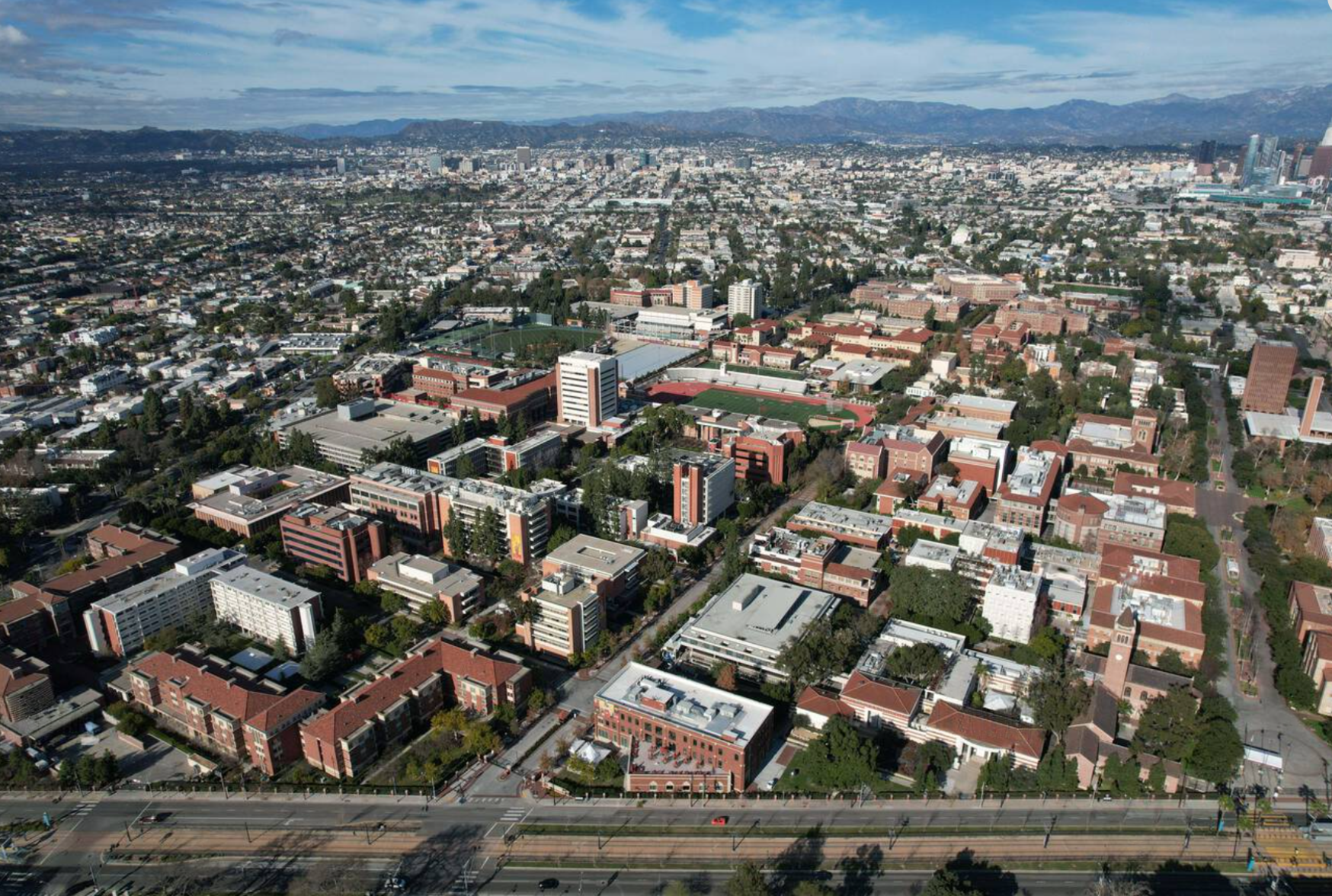
The University of Southern California campus — which is essentially just a collection of small businesses.
Let's dive into a few quick examples.
A Personal Example
When I was recently a GNC intern at Blue Origin this spring, there was another GNC intern who was finishing his degrees in Aeronautics/Astronautics at Stanford.
He went to Stanford for his Bachelors and Masters — I went to the University of Southern California for my Master's in Astronautical Engineering (and half of my PhD).
When we hopped on a call, something we found out we had in common is that despite being at very prestigious, top universities at top aero/astro programs in California, we had both previously worked in very underfunded plasma physics labs at our respective institutions for several years.
Similar to me and my situation with my contamination research, he realized that plasma physics wasn't very lucrative, so for his last couple of years or so at Stanford, he transferred to one of the more prestigious space autonomy and GNC labs at Stanford.
In his own words, "the funding (and support he got) was night and day" between the plasma physics and GNC labs that he worked in at Stanford.
This is something I also similarly observed when transitioning from my own advisor's plasma physics lab at USC to my GNC team at Blue Origin — the amount of money that was being invested into my specific project was also "night and day" compared to my PhD lab.
As a corollary, switching from contamination / plasma physics to GNC not only led to a more well-funded environment for both of us, but much better job opportunities and prospects as well.
The takeaway is that some PhD labs (and/or other parts of the university, as well as industry companies) are swimming in money, whereas many others struggle badly despite seemingly being the same to outside observers.
Universities are NOT a monolith. There are some amazing and thriving parts of the university that you absolutely want to align yourself with, and there are some deep dark crevices and corners that you can (and don't want to) get trapped in.
Two people can have drastically different experiences despite going to the same school.
A Few More Examples
A more polarizing but illustrative example of a university simply being a collection of corporations or small businesses is the Football and Basketball Teams.
Both of those sports teams are essentially their own independent corporations under the larger umbrella of the university, and are massive revenue and profit drivers, just like an NFL or NBA team would be within their own city.
At USC and many major universities, the health system is by far the biggest revenue driver for the university (resulting in about 45% of all revenue, whereas tuition for example only amounts to 24% of USC's revenues for 2025).
In this case, this component of USC is much more like a "big business," and ethics aside, it provides a substantial amount of profits, just like a real hospital system would in real life. Furthermore, it supports and provides plentiful funding to a lot of Doctoral and Master's students and their respective research labs.
In a strong contrast to my PhD lab, I had friends on the health sciences campus who were PhD students who worked in larger teams (& didn't work completely on their own like me), had catered lunches (and sometimes even dinners) everyday, had plenty of money and funding for their PhD labs, and they also graduated with their PhDs in 3–3.5 years whereas I (and many of the people in my department) were looking at 5–7 year PhD timeline (or sometimes worse).
On the surface, we had the same title — "University of Southern California PhD Student" — but our experiences couldn't have been any different since they were in a very financially healthy "business" within the university whereas I wasn't as much.
The same goes for non health sciences labs as well — outside of health sciences, there are many different types of labs on campus which are incredibly healthy from a financial perspective (plentiful funding, grants, support, etc.).
Outside of health sciences, some that I can think of off the top of my head that are doing very well right now (in the mid-2020s) are AI, Machine Learning, Autonomy, and Robotics type labs.
Many of the Undergraduate, Masters, and PhD students who work in those types of labs will build skills and career capital which will lead to highly lucrative careers when they graduate. And they'll probably have a much better day-to-day experience when they're here, too.
Tangible Takeaways
First, as you saw in the Stanford and USC examples, prestige does not fully matter.
In a vacuum, prestige helps if you take advantage of it – I've gained tremendous benefits from going to USC and having that brand on my resume – but it can't always overcome aligning yourself with the wrong people (or "businesses") within the university.
To expand on that, whether you're at a top university or not, you need to align yourself with professors, labs, or other extracurriculars which have a lot of steam behind them.
This is a lot like joining a real-world business which has a lot of momentum behind it or a startup which has a ton of funding and upcoming growth upside.
If you join a more stagnant or "declining" part of the university, you might waste precious time, end up wasting several years of your early career, and set yourself back years compared to where you could've been.
This would've been me along with the Stanford guy had we stayed in our respective plasma physics labs long-term.
Had we, top students at top aero/astro departments at top institutions (Stanford and USC) not pivoted out of our respective plasma physics labs, we might've been much less better off than, say someone from a "Tier-2" or "Tier-3" state school who simply aligned themselves with professors or extracurriculars there which allowed them to focus on gaining a more lucrative skillset (e.g. GNC, AI, ML, etc.) from day one.
They may have punched their ticket to a highly coveted, highly paid GNC role at a top company, while we were studying contamination (or related topics), struggling... to get contaminated... with job offers despite our schools' massive prestige.
Quick Side-Note:
To hit this point even further home that "prestige doesn't matter as much as what you're working on" within whatever organization or university you're at, let me give a quick story.
When I was at Blue Origin during my Spring 2026 internship and had the opportunity to ask one of the top contamination people in the world (who wasn't my biased co-advisor) whether I should finish the Contamination PhD or just leave now and go all-in on GNC, their answer was unequivocally:
"DO NOT go the PhD/Contamination route. Leave now and 100% go all-in on GNC."
Now while I actually don't care much about contaminaiton itself, there was a part of me that wanted to go back to USC and keep enjoying the broader spectrum of benefits that come with the USC experience and being a USC student, along with the potential benefits of having the PhD title.
But this veteran contamination engineer - who had carved out a pretty cool niche in contamination for themselves at the company they worked for - gave an anecdote which made it 100% clear that I should NOT go back to finish a PhD with contamination as my topic.
The story was that half of the spacecraft contamination control group at NASA Jet Propulsion Laboratory - NASA JPL - in Pasadena had been let go due to the massive layoffs and budget shortfalls that JPL has been experiencing for several years now.
The ones that were let go had a hard time finding jobs -- DESPITE having the "prestige" of JPL on their resumes -- because as I found out during my 18 months working in spacecraft contamination.. is that it doesn't exactly... contaminate you... with a lot of job offers.
And even worse, is that two of their friends who weren't laid off still wanted new jobs because of the toxic working environment post-layoffs, but weren't able to for over 2-1/2 years (and they were still looking as of the time of this story in April 2026) despite the prestige of JPL since no one wants to hire for a contamination skillset.
So even though they didn't get fired, they haven't been able to pivot to greener pastures despite the massive prestige of having JPL on their resume.
Had they been JPL GNC Engineers or JPL Robotics engineers whose skillsets were in high demand across the industry, they would've easily been able to jump ship.
And they would've likely had better shots than say GNC or Robotics engineers from smaller companies that no one's heard of - this is where something like the name-brand of JPL could be a tiebreaker and hold some weight.
Long story short, prestige can help for sure, but only if you have leverage. Focus on leverage first, prestige second.
Leverage (gaining rare and valuable skills and "career capital") matters WAY more.
I myself have a soft-spot for state schools and a bit of a chip on my shouder still despite going to USC from age 21 to 25 since I went to my own state school - the University of Minnesota - for my undergrad from 16 to 21.
I've seen both sides of the coin - being at a top school can definitely provide some advantages, but it's not required to be successful at all. It's what you do with the opportunities in front of you and who you align yourself with that really matters.
Back to the main point of this section, professors are sort of like business owners in a way, and there's some that are the equivalent of brilliant "founders" who you absolutely want to work with, and some who are just skating by or even failing. Make sure you work with the former.
Remember — Universities are simply a collection of small businesses. Make sure you align yourself with the highest growth "businesses" and best "founders" with a lot of steam behind them and you'll set yourself up for success.
Appendix: Relative Career Capital
One caveat I'll mention is that your outcomes aren't only influenced by the "business" within the university that you join, but also by your own standing and leverage within it.
For example, in 2023, star quarterback and football player Caleb Williams and I both had the title of "USC Student" but had drastically different opportunities since he was very, very good at something which paid well.
As a result, he received much better perks than I did — free apartments, meals, millions in NIL deals, and so on; and he eventually became the number 1 pick in the NFL draft.
On the other hand, there might've been someone on the football team (e.g. the 53rd man on the roster) who didn't have the same level of talent, and despite being in the same part of the university, received a lot less opportunities beyond their normal full ride scholarship and other perks (e.g. not millions in NIL deals, or free stuff).
And even beyond that, there might be an athlete who's maybe just as talented and hard-working, but doesn't even get the scholarship since they're in a less lucrative sport within the university which doesn't generate any revenue and therefore doesn't hand out full ride scholarships to all of its players. They might even be struggling to pay for tuition, who knows.
So while the opportunity vehicle you pick within the university can have a huge impact on your outcomes (as shown above), your relative skillset and leverage coming into the university in the first place can have a huge impact too.
Being the 53rd or 25th man on the USC Football team will probably land you better opportunities than being the top person on, say, the water polo or rowing teams – the opportunity vehicle you pick absolutely matters.
But your own value and personal standing within that opportunity vehicle matters just as much – it's the combination of the two that will maximize your results.
Ideally, you'll both pick the right vehicle, and get good – this is where you'll maximize your opportunities at university.
There's a saying I learned from an older Astronautical Engineering PhD Student who mentioned that "if you bring in money, you will be favored," and that definitely rings true in careers and life!